Poliester 2213 biały
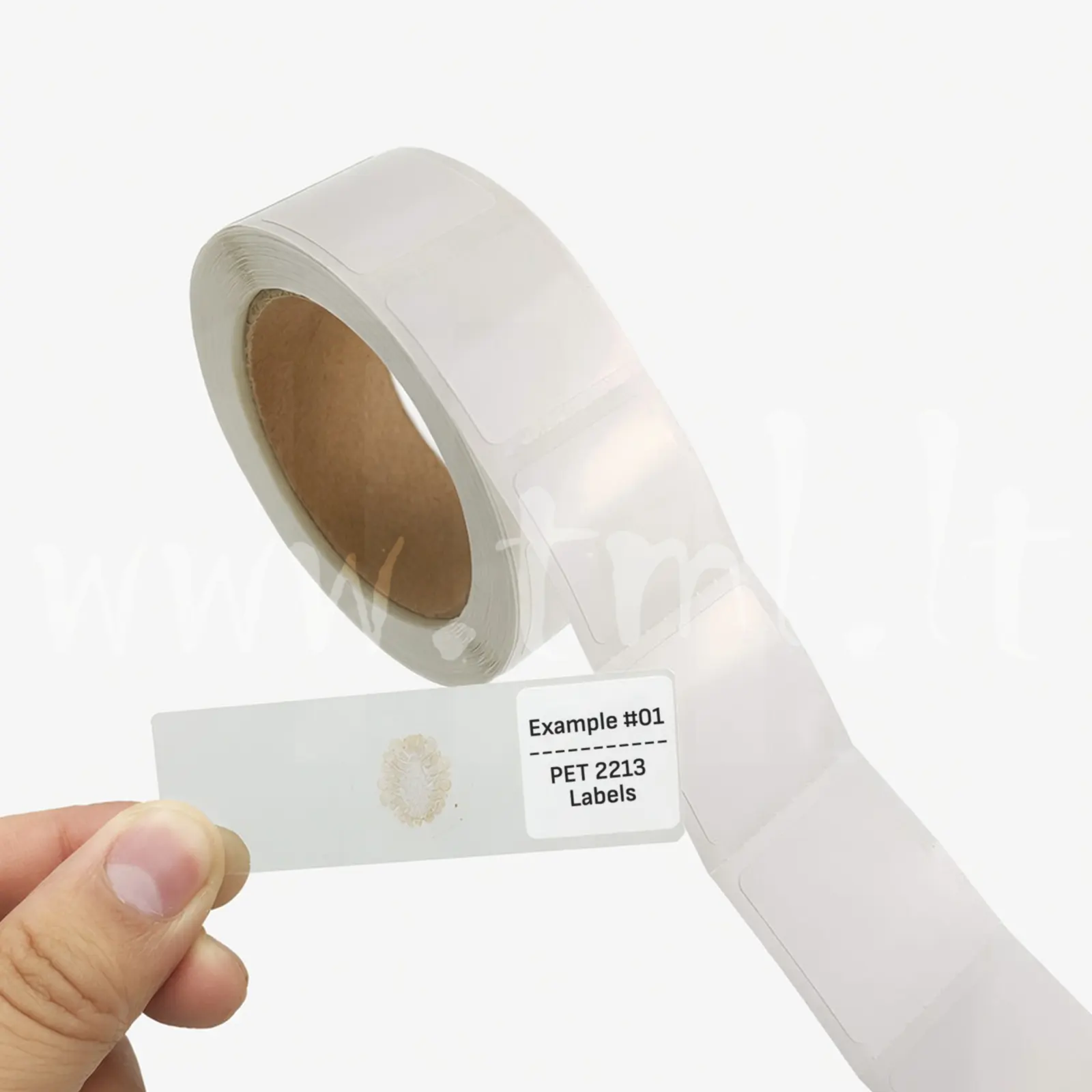
Chemically resistant labels for histological and cytological studies in laboratories.
White glossy polyester 2213 labels with enhanced solvent resistant and reinforced adhesive.
Application: Chemically resistant labels for slides in cytological and histological laboratories.
Material: polyester.
Color: white.
Surface: glossy.
Adhesive: reinforced.
Labels are supplied to laboratories as a set of LAB1, consisting of:
1) Polyester 2213 labels 19×19 mm – 2 rolls (1700pcs/roll)
2) Ribbon Ricoh B110CU – 1 pc (74m/roll)
| Main application | Identification label |
| Informative tag for identification of various equipment, instruments and other long-term use products exposed to particularly aggressive solvents (including acetone and ortho-xylene). The material is resistant to xylene, toluene, ethanol, autoclaving (+150°C). It can be applied on rough (powder coated) and low-energy surfaces. Main consumers: the automotive, chemical industry, medicine, aviation, instrument engineering enterprises, electronics, and other industrial manufacturers. The material has been successfully tested in advanced oncology diagnostic laboratories. | |
| Material type | Polyester, 50 microns |
| High chemical resistance. The most popular material type for marking industrial products. Stands out for high wear resistance, resistance to moisture, solvents and fading. | |
| Operating temperature | From -40°С to +150°С |
| The constant exposure of this temperature does not change the properties and appearance of the label. | |
| Adhesive (adhesive layer) | Reinforced, 20 microns |
| Reinforced acrylic adhesive polymerising under pressure. | |
| Color and appearance | White glossy |
| Does not glare, does not reflect, does not fade. Provides high contrast of barcodes and graphics. | |
| Surface coating | |
| The smooth covering is suitabe for the thermotransfer printing using ribbon B110CU. It is recommended to use low print speed and high printing heat in order to achieve maximum chemical resistance | |
| Labeling recommendations | |
| For best result, it is recommended to apply the label on a clean, degreased, dry surface, press or roll it with a rubber roller, and incubate for 24 hours at room temperature. | |